The life and Art of Anne Eisner
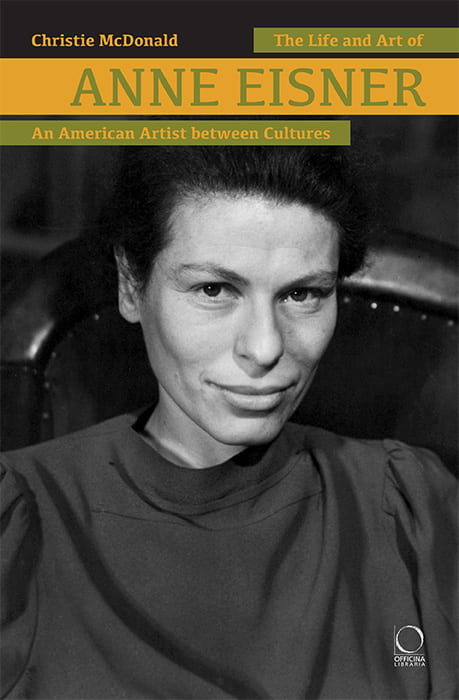
This biography follows Anne Eisner’s life and artistic practice across cultures—from her early career in New York, through her years on the edge of the Ituri Forest in the former Belgian Congo, to her eventual return to the United States. Coming of age amid the artistic and intellectual struggles of the 1930s and 1940s, Eisner left a successful painting career to join anthropologist Patrick Putnam in the multicultural community of Epulu, where her commitments to aesthetic inquiry, freedom, and equality shaped her distinctive position within a colonial setting. Confronted with unforeseen personal and social challenges—including an unconventional marriage, communal responsibilities, and Putnam’s decline—she continually turned to drawing and painting as a sustaining discipline. The enduring beauty of her work attests to the creative resilience that defined her life.
"In this radiant biography, the painter Anne Eisner springs to life as a figure of formidable originality... Christie McDonald’s heroic, feminist work restores Eisner as artist and as a key anthropological observer of her time." - Rosanna Warren, author of Max Jacob: A Life in Art and Letters.
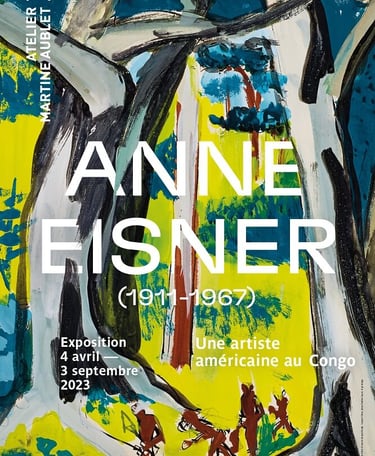
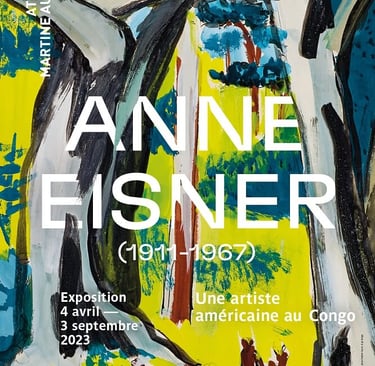
Anne Eisner
Une artiste Américaine au Congo
Anne Eisner Putnam (1911–1967), artiste new‑yorkaise et aquarelliste, a vécu dans l’ancien Congo belge durant les années 1940 et 1950. Suivant l’anthropologue Patrick Putnam jusqu’à la communauté d’Epulu, elle devient l’une des “mères” mbuti, accueille chercheurs et voyageurs, et contribue à la vie locale en soutenant un hôpital et une aide juridique. Après avoir accompagné Putnam jusqu’à sa mort, elle rentre à New York où elle poursuit son œuvre et publie Madami, le récit vibrant de ses années parmi les Pygmées du Congo.
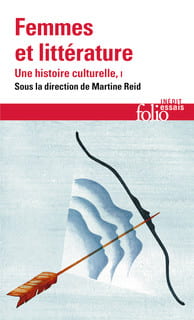
Femmes et Litterature:
Une histoire culturelle
Femmes et littérature, une histoire culturelle offre pour la première fois un ample panorama de la présence des femmes en littérature, du Moyen Âge au XXIᵉ siècle, en France et dans les pays francophones. Composé de deux volumes, l'ouvrage rend compte des multiples formes que prend leur production selon le temps auquel elles appartiennent : poésie, théâtre et roman, correspondance, journal intime et autobiographie, essai, pratique journalistique, littérature populaire et littérature pour enfants. Leur participation active à la vie littéraire, leur présence dans les cours et couvents, salons, cercles et académies, dans la presse et les médias, leur rapport au manuscrit, au livre et à l'édition, leurs réflexions sur l'éducation ainsi que sur leur "condition" spécifique sont analysés et mis en perspective. Fruit du travail collectif d'une dizaine de spécialistes, une telle synthèse contribue à enrichir considérablement les connaissances existantes. Elle rend ainsi toute sa place à une production littéraire souvent ignorée, rarement reconnue à sa juste valeur.
Encounters
in the Arts, Literature
and Philosophy
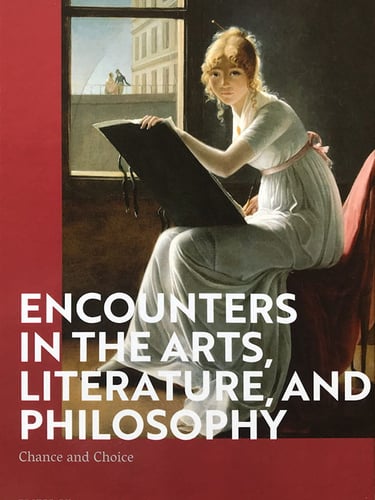
Encounters in the Arts, Literature, and Philosophy examines both spontaneous and orchestrated encounters as generative sites where new forms, concepts, and interpretive frameworks emerge. Moving beyond traditional hermeneutics, Jérôme Brillaud and Virginie Greene present a volume that demonstrates how attending to encounters represented in artefacts, texts, and films constitutes a dynamic mode of interpretation. Bringing together leading scholars—including Christie McDonald, Pierre Saint‑Amand, Susan Suleiman, and Jean‑Jacques Nattiez—the collection offers a multidisciplinary dialogue across philosophy, literature, musicology, and film studies. Drawing primarily on French cultural materials from the Early Modern period through the twentieth century, it provides a representative range of theoretical and hermeneutic approaches.
Proust and the Arts
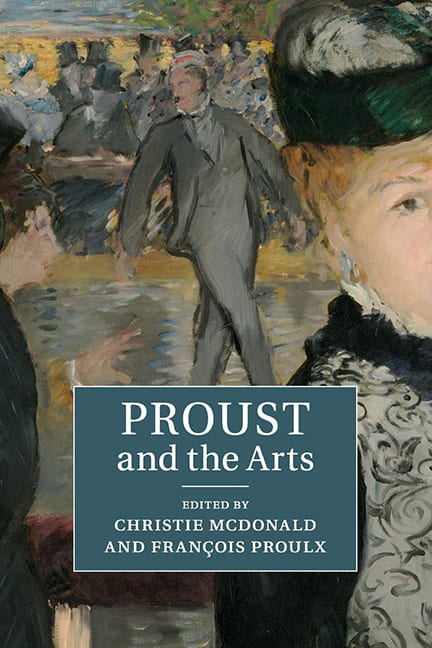
Proust and the Arts brings together expert Proustians and renowned interdisciplinary scholars in a major reconsideration of the novelist's relation to the arts. Going beyond the classic question of the models used by Proust for his fictional artists, the essays collected here explore how he learned from and integrated, in highly personal ways, the work of such creators as Wagner or Carpaccio. This volume reveals the breadth of Proust's engagement with varied art forms from different eras: from "primitive" arts to sound recordings, from medieval sculpture to Art Nouveau glassmaking, and from portrait photography to the private art of doodling. Chapters bring into focus issues of perception and detail in examining how Proust encountered and responded to works of art, and attend to the ways art shaped his complex relationship to identity, sexuality, humor, and the craft of writing.
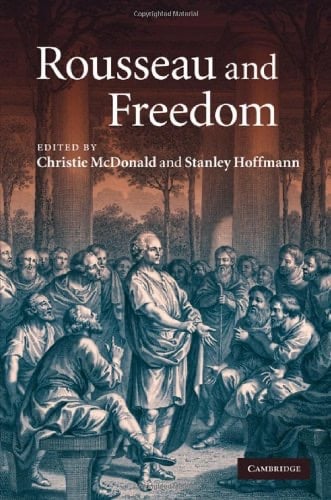
Rousseau and Freedom
Rousseau’s modern account of freedom, first articulated in the eighteenth century, shaped Enlightenment thought, influenced the French Revolution, and continues to inform contemporary debates. This 2010 volume explores his varied treatments of freedom across literature, religion, music, theater, gender, the body, and the arts. Its contributors draw on multiple disciplines to offer fresh perspectives, and by using freedom as their central lens, they present an interpretation of Rousseau’s work.
French Global
Edited by: Christie McDonald and Susan Rubin Suleiman
This volume reconceptualizes French literary history by situating it within the broader networks of cultural exchange, mobility, and encounter that have shaped French‑language expression both within and beyond the nation’s territorial boundaries. Advancing a global paradigm that extends traditional discussions of “Francophonie” to encompass the full historical range of French literature, the contributors examine how texts from the Middle Ages to the present emerge through processes of border crossing, colonial and postcolonial interaction, and linguistic plurality. Their essays reassess canonical works and foreground texts historically excluded from the literary canon, emphasizing alternative configurations of language, space, and nation. In doing so, the volume articulates a methodological model attentive to temporal and geographic specificity while engaging the theoretical concerns that define the study of national literatures in the twenty‑first century.
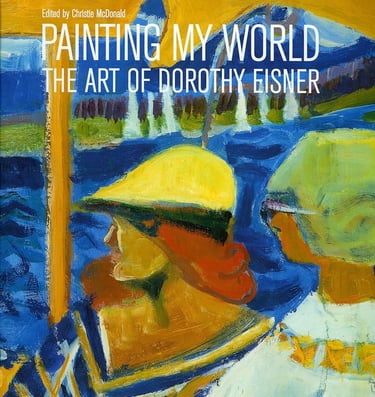
Painting My World: The Art of Dorothy Eisner
This work celebrates the remarkable seven‑decade career of American painter Dorothy Eisner (1906–1984), whose bold vision and restless experimentation shaped a body of work as dynamic as the century she lived through. Tracing her evolution from early modernist explorations to the vibrant, expressive canvases of her later years, the book offers a vivid portrait of an artist who continually reinvented her style while remaining unmistakably herself. Richly illustrated and critically insightful, it reintroduces Eisner as a major voice in twentieth‑century American art—innovative, fearless, and long overdue for renewed attention.
The Proustian Fabric reveals how Marcel Proust transformed the association of ideas—from Freud to Saussure to modernist literature—into the engine of Remembrance of Things Past. Drawing on newly available Pléiade variants and a deep understanding of Proust’s philosophical and historical world, Christie McDonald shows how Proust’s masterpiece bridges nineteenth‑century quests for totality and twentieth‑century open‑ended interpretation. This groundbreaking study reconsiders Proust’s methods and illuminates his engagement with philosophy, literature, art, and politics, offering a fresh, richly layered portrait of his creative process.
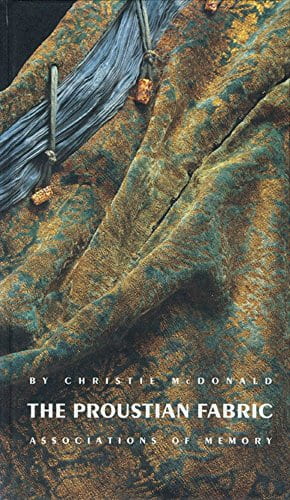
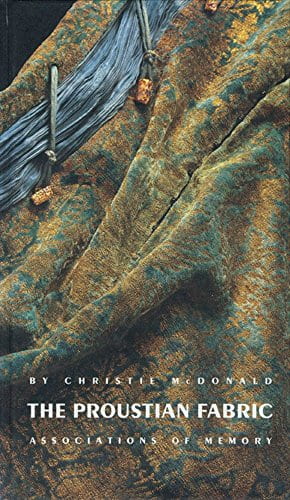
The Proustian Fabric
Images of Congo
Images of Congo uncovers the extraordinary journey of New York artist Anne Eisner, who spent nine years in the former Belgian Congo after following anthropologist Patrick Putnam to the edge of the Ituri forest. Immersed in Mbuti life, she recorded legends, wrote ethnographic notes, and cared for three orphaned infants. After Putnam’s collapse and the destruction of his camp, Eisner rebuilt Epulu and later published a memoir that both revealed and reframed her time in the forest. This book restores her voice and illuminates a pivotal moment in Congo’s history.
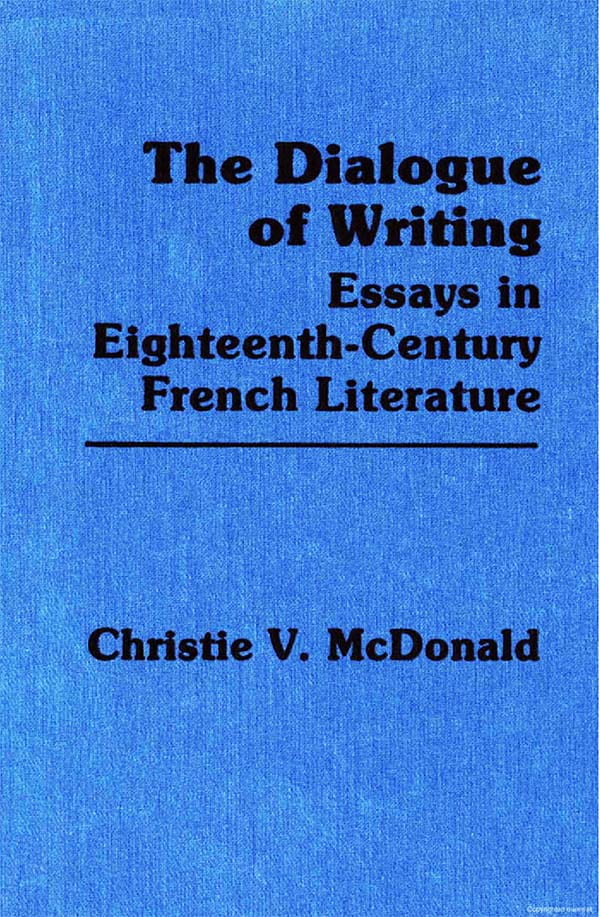
The Dialogue of Writing
The Dialogue of Writing reimagines dialogue—not just as a literary form, but as a powerful metaphor for how texts speak to one another across time. Exploring the works of Rousseau and Diderot, this study uncovers the intricate exchanges between writers and readers, and between texts and their intertextual echoes. Drawing on deconstruction, sociology, and anthropology, it reveals the rich, multilayered processes that make writing and reading profoundly relational acts.
Essential for readers of eighteenth‑century French literature, this volume also offers fresh insight for those engaged with contemporary literary theory, from Barthes and Derrida to Benveniste and Lévi‑Strauss. It is a vibrant invitation into the endlessly generative “dialogue” that defines literature itself.